
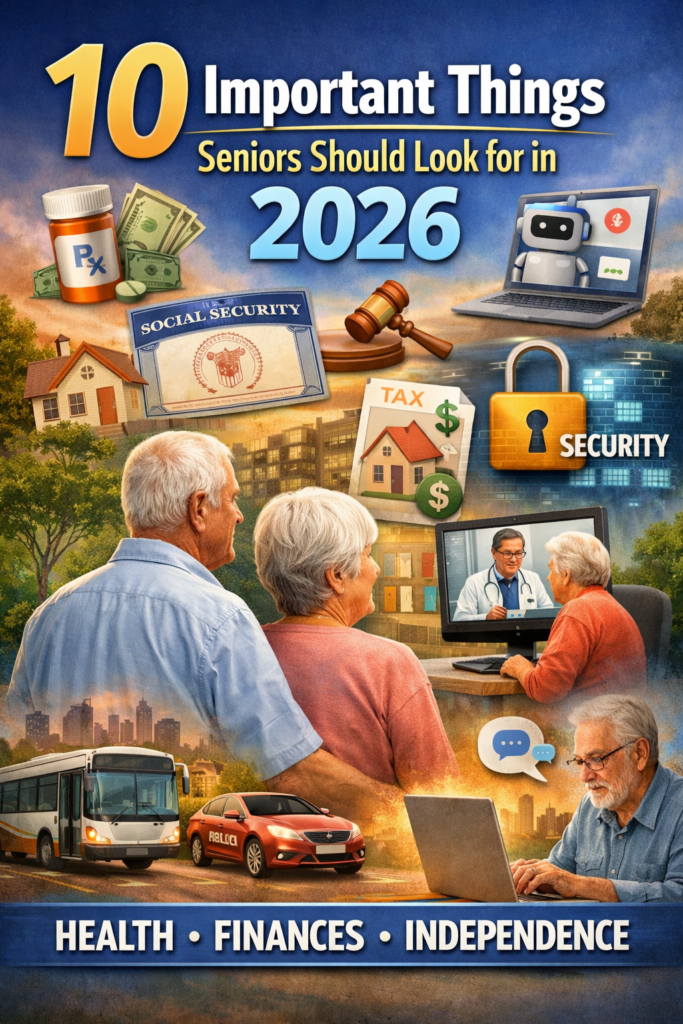

As 2026 approaches, many seniors are asking the same quiet question: What should I really be paying attention to now?
- Not headlines.
- Not social media noise.
- Not political shouting matches.
The focus should be on matters that have a tangible impact on everyday life.
For seniors, the coming year isn’t about chasing trends. It’s about protecting independence, stability, health, and the ability to live with dignity. Some of the most significant changes ahead aren’t dramatic. They’re subtle. And those are often the ones that matter most.
Here are ten crucial areas seniors should closely monitor in 2026, along with the reasons behind each one’s importance.
1. Healthcare costs (not just coverage)
Watch what happens to out-of-pocket costs—prescriptions, specialists, and long-term care. Insurance can look fine on paper and still nickel-and-dime you in real life.
2. Prescription drug access
More generics, more mail-order options, and tighter rules on pricing are coming. The question is whether they actually make meds easier to get—or just harder to understand.
3. Social Security changes
These changes are not necessarily cuts, but rather adjustments. COLAs, retirement age discussions, and taxation thresholds are all on the table.
Even small tweaks matter if you’re on a fixed income.
4. Digital IDs & online security
Banks, medical portals, and even government services are pushing harder online. Seniors should watch for:
- Simpler login systems
- Better fraud protection
- Less reliance on passwords
Scams aren’t slowing down. Protection has to speed up.
5. AI replacing human help
Customer service, healthcare triage, and even financial advice is being automated. The key question:
👉 Can you still reach a real person when it matters?
6. Property taxes & housing affordability
Rising local taxes and insurance can quietly price people out, even if they have paid off their homes. Many seniors are already feeling this squeeze.
7. Transportation options
Driving less doesn’t mean giving up independence—if communities invest in:
- Senior-friendly transit
- Rideshare alternatives
- Walkable planning
Watch your local government here.
8. Telehealth quality
Telehealth is here to stay, but quality varies wildly. In 2026, look for:
- Better diagnostics
- Fewer rushed appointments
- Clear follow-ups
Convenience only helps if care stays solid.
9. Work & income flexibility
More seniors are choosing part-time or project work—not because they have to, but because they want to. Watch for:
- Age-friendly hiring
- Flexible schedules
- Fewer penalties for earning while retired
10. Free speech & open discussion
This final point goes beyond finances or healthcare, but it matters deeply.
Many seniors grew up in a time when debate, disagreement, and conversation were normal parts of public life. Today, online platforms and public spaces are increasingly regulated, moderated, and filtered.
In 2026, seniors should pay attention to:
- Where open discussion is still encouraged
- How speech rules are enforced
- Whether respectful disagreement is allowed
This affects news consumption, social interaction, and the ability to share opinions without fear of being silenced.
A healthy society depends on conversation—not conformity.
The Bigger Picture
The common thread across all ten of these issues is control.
- Control over money.
- Control over healthcare.
- Control over information.
- Control over daily life.
Seniors in 2026 won’t need more noise. They’ll need clarity, transparency, and choices that respect their experience and independence.
Paying attention now—before changes become permanent—can make the difference between reacting and preparing.