Blog

The Best Ways to Advertise and Promote Your Affiliate or MLM Opportunity (Without Damaging Your Reputation)

  • Save

Building a successful affiliate marketing or MLM business isn’t just about finding the right opportunity—it’s about consistently putting your offer in front of the right audience. Many people join an affiliate program or network marketing company expecting immediate results, only to discover that simply sharing a referral link with friends and family isn’t enough to build a sustainable business.

The truth is that successful marketers treat their business like a real business. They develop marketing strategies, create valuable content, build relationships, and earn trust before asking for a sale. Whether you’re promoting affiliate products, digital services, health supplements, financial tools, educational courses, or an MLM opportunity, the principles of effective marketing remain largely the same.

In this guide, you’ll discover some of the most effective ways to advertise and promote your affiliate or MLM opportunity while building credibility, generating consistent leads, and creating long-term growth.


1. Build a Professional Personal Brand

People rarely join companies—they join people they trust.

Your personal brand is what separates you from thousands of others promoting the exact same opportunity. Instead of leading with sales pitches, focus on becoming someone who educates, inspires, and provides value.

A strong personal brand includes:

  • A professional profile photo
  • A clear bio explaining who you help
  • Consistent branding across platforms
  • Authentic stories about your journey
  • Valuable educational content

When people see you consistently helping others, they’ll naturally become curious about what you do.

Remember, authenticity often outperforms perfection. Share your experiences honestly, including challenges you’ve overcome, lessons you’ve learned, and milestones you’ve reached.


2. Create Valuable Content

Content marketing is one of the most effective long-term advertising strategies available.

Instead of constantly posting “Join my team” messages, create content that answers questions your ideal audience is already asking.

Examples include:

  • How-to articles
  • Educational videos
  • Industry tips
  • Success habits
  • Product tutorials
  • Case studies
  • Frequently asked questions
  • Personal experiences

Every piece of content builds trust while increasing your online visibility.

Think of every blog post, video, or social media update as another opportunity for potential customers to discover you.


3. Start a Blog

A blog acts as your digital home base.

Unlike social media, where posts quickly disappear from feeds, blog articles can generate traffic for months or even years through search engines.

Topics could include:

  • Product reviews
  • Industry news
  • Beginner guides
  • Business tips
  • Marketing strategies
  • Customer success stories
  • Frequently asked questions

Optimize your articles with relevant keywords so people searching online can find your content naturally.

The more quality articles you publish, the more opportunities you create for attracting organic visitors.


4. Use Search Engine Optimization (SEO)

Search engine optimization allows potential customers to find you without paying for every click.

Good SEO involves:

  • Researching keywords
  • Writing high-quality articles
  • Optimizing page titles
  • Using descriptive headings
  • Improving website speed
  • Creating helpful content
  • Building backlinks

SEO is a long-term investment, but once your pages begin ranking, they can produce consistent traffic around the clock.


5. Leverage Social Media Platforms

Social media remains one of the most accessible ways to reach potential customers and business partners.

Popular platforms include:

  • Facebook
  • Instagram
  • LinkedIn
  • TikTok
  • YouTube
  • X
  • Pinterest

Rather than posting only promotional content, follow a balanced strategy.

For example:

  • 60% educational content
  • 20% personal stories
  • 10% engagement posts
  • 10% promotional offers

This approach keeps your audience interested while avoiding the appearance of constant selling.


6. Create Short-Form Videos

Short videos continue to receive strong engagement across multiple platforms.

Ideas include:

  • Quick business tips
  • Product demonstrations
  • Before-and-after stories (where appropriate and truthful)
  • Frequently asked questions
  • Day-in-the-life videos
  • Productivity advice
  • Motivation
  • Industry updates

Keep videos concise, informative, and engaging.

Many successful marketers generate thousands of views simply by consistently publishing helpful videos.


7. Build an Email List

An email list is one of the few marketing assets you truly own.

Social media algorithms change constantly, but your email subscribers remain your audience.

Offer something valuable in exchange for an email address, such as:

  • Free guides
  • Checklists
  • E-books
  • Training videos
  • Webinars
  • Templates

Once subscribers join your list, continue providing value through educational emails before introducing your affiliate or MLM opportunity.

This relationship-first approach often leads to higher conversion rates.


8. Host Webinars or Live Events

Live presentations allow potential customers to interact directly with you.

Topics might include:

  • Industry education
  • Product training
  • Business opportunities
  • Marketing tips
  • Personal development
  • Success stories

During a live event, participants can ask questions, helping build trust and confidence.

People are more likely to take action after engaging with someone in real time.


9. Use YouTube for Evergreen Traffic

YouTube functions as both a social platform and a search engine.

Educational videos continue attracting viewers long after publication.

Video ideas include:

  • Product comparisons
  • Tutorials
  • Reviews
  • Success strategies
  • Marketing education
  • Frequently asked questions

Always include clear calls to action directing viewers toward your website, landing page, or email list.


10. Network Authentically

Networking remains one of the oldest and most effective forms of promotion.

Attend:

  • Business events
  • Trade shows
  • Networking groups
  • Industry conferences
  • Community events
  • Online networking communities

Focus first on building genuine relationships rather than immediately promoting your opportunity.

People naturally become interested when they trust you.


11. Utilize Paid Advertising Carefully

Paid advertising can accelerate growth when used responsibly.

Common platforms include:

  • Google Ads
  • Facebook Ads
  • Instagram Ads
  • LinkedIn Ads
  • YouTube Ads

Before investing heavily, understand the advertising policies for your platform and ensure your promotions comply with both the platform’s rules and the affiliate program or MLM company’s policies.

Start with a modest budget, measure performance, and optimize based on data rather than assumptions.


12. Create a Lead Capture Funnel

Instead of sending traffic directly to your affiliate link, consider building a simple marketing funnel.

A basic funnel may include:

  1. Landing page
  2. Free resource
  3. Email follow-up sequence
  4. Educational content
  5. Offer presentation

This approach allows you to build relationships before presenting your opportunity.

Many experienced marketers find that nurturing leads over time can improve long-term engagement compared with immediately asking for a sign-up.


13. Encourage Customer Referrals

Satisfied customers often become your best advertisers.

Ask happy customers to:

  • Leave reviews
  • Share testimonials
  • Recommend your services
  • Refer friends

Positive word-of-mouth creates credibility that paid advertisements often cannot match.

Always ensure testimonials are truthful, typical where required, and compliant with applicable advertising regulations.


14. Join Online Communities

Facebook Groups, LinkedIn Groups, Reddit communities, Discord servers, and industry forums can help you connect with people interested in your niche.

Avoid dropping referral links into conversations.

Instead:

  • Answer questions
  • Provide helpful advice
  • Share educational resources
  • Build relationships

Over time, people naturally become interested in learning more about your business.


15. Develop Educational Resources

Educational content establishes authority.

Consider creating:

  • Free guides
  • PDF checklists
  • Mini-courses
  • Tutorials
  • Resource libraries
  • Business planners

People appreciate marketers who teach rather than simply sell.

Education builds trust, and trust often leads to long-term customer relationships.


16. Optimize Your Website for Conversions

A beautiful website means little if visitors don’t know what to do next.

Every page should include a clear call to action.

Examples include:

  • Learn More
  • Download the Guide
  • Watch the Webinar
  • Schedule a Call
  • Join the Newsletter

Keep navigation simple and make it easy for visitors to find the information they’re seeking.


17. Track Your Marketing Results

Successful marketers rely on data rather than guesswork.

Monitor key performance indicators such as:

MetricWhy It Matters
Website TrafficMeasures audience growth
Email SubscribersIndicates lead generation success
Conversion RateShows how effectively visitors become customers or partners
Cost Per LeadHelps evaluate advertising efficiency
Engagement RateReflects audience interest
Click-Through RateMeasures content effectiveness

Regular analysis allows you to identify what’s working and where improvements are needed.


18. Stay Consistent

One of the biggest reasons people fail in affiliate marketing or MLM is inconsistency.

Posting for one week and disappearing for a month rarely produces lasting results.

Create a realistic schedule for:

  • Blogging
  • Social media
  • Email newsletters
  • Video creation
  • Networking
  • Learning new skills

Consistency compounds over time. Small, regular efforts often produce better long-term outcomes than occasional bursts of activity.


19. Follow Ethical and Compliant Marketing Practices

Regardless of the opportunity you’re promoting, ethical marketing should remain a top priority.

Avoid making exaggerated or unrealistic claims about income, lifestyle, or product performance. If discussing earnings, use accurate, substantiated information and follow your company’s compliance guidelines as well as applicable advertising laws.

Be transparent when promoting affiliate links by providing appropriate disclosures. Honesty strengthens credibility and helps build long-term relationships with your audience.

Ethical marketing may not promise overnight success, but it supports a sustainable business built on trust and reputation.


20. Keep Learning and Adapting

Digital marketing changes rapidly. Search engine algorithms evolve, social media trends shift, and consumer preferences change over time.

Invest in your skills by learning about:

  • SEO
  • Copywriting
  • Video marketing
  • Email marketing
  • Analytics
  • Social media strategy
  • Artificial intelligence tools
  • Customer psychology

The most successful affiliate marketers and network marketers are lifelong learners who continually refine their approach based on experience and reliable data.

Treat every campaign as an opportunity to learn, test, and improve.


Final Thoughts

Advertising and promoting an affiliate or MLM opportunity successfully requires far more than repeatedly posting referral links or making sales pitches. Sustainable growth comes from building trust, providing genuine value, and consistently showing up where your audience spends time.

By focusing on education, relationship building, quality content, ethical marketing, and continuous improvement, you can create a marketing system that attracts interested prospects while strengthening your personal reputation. Some strategies—such as SEO, blogging, and email marketing—may take time to gain momentum, while others—such as networking, short-form video, or webinars—can generate engagement more quickly. The most effective approach is usually a combination of several complementary channels rather than relying on just one.

Remember that every successful business is built one relationship at a time. Prioritize helping people solve problems, communicate transparently, and comply with applicable regulations and company policies. Over time, those practices can help you develop an audience that not only trusts your recommendations but also returns for future advice and opportunities.

How To Start Affiliate Marketing With No Money

Think you need a big budget to start affiliate marketing? You don’t. Start with one niche you already understand, one content platform you can post on for free, and one beginner-friendly offer that actually solves a problem. Your first goal is not passive income. It’s proof: one click, one lead, one sale. Publish helpful content, answer real buyer questions, and send people to one clear next step. If you want the free starter stack I recommend for niche research, links, and content planning, grab it through my affiliate link below.

Find out now how you can start with a one-time affiliate fee of $40 + a $10 monthly subscription.

Go to https://reachforthestarsandearn.com and tell them Phil McCloud invited you.

15-Minute Time Inventory: Find Buried Hours in Your Week

Quick question: if you lose just fifteen minutes a day to low-value tasks, what does that become by the end of the week? Fifteen minutes times seven is one hour and forty-five minutes — nearly two full hours. Over a month, that sneaks into seven and a half hours. Imagine finding even half of that and turning it into focused work or real rest. That’s why a fifteen-minute audit is the fastest, most leverage-packed thing you can do this week.

Here’s my promise: in the next fifteen minutes you’ll finish with one clear calendar rule, a prioritized list of small time wins, and a repeatable template you can run every week. No apps required—just a notebook or your phone and a willingness to be honest for a few minutes. By the end you’ll have one simple next action you can apply right now.

Step one: Capture. This is about speed, not perfection. Set a timer for five minutes. On a single line for each entry, write every activity you remember doing this week — big and small. Meeting: Marketing stand-up. Email: Inbox triage. Commute: 30 minutes. Lunch: 40 minutes. Phone scrolling. Quick things like “checked Slack” or “responded to low-priority email” belong here too. Keep it literal: who, what, how long when you can. If you can’t remember exact minutes, use approximations. This raw list is your inventory of buried time.

Two quick capture tips I use with founders: first, group by day if that helps jog memory—Monday morning, Tuesday afternoon—then turn those into single-line entries. Second, don’t over-edit. The goal is five minutes of capture, not a forensic audit. You’ll be surprised how much comes back once you commit to the timer. If you’re doing this live while you listen, pause me now and jot down everything you can think of from the last seven days.

Step two: Categorize. Take your captured items and sort them into three buckets: value, neutral, and drain. Value moves your core goals forward — client work, product progress, meaningful conversations. Neutral keeps things running but isn’t high leverage—routine admin and routine check-ins you can batch. Drain is time that leaks without measurable benefit—reactive scrolling, duplicate meetings, and shallow interruptions. Use these quick signals:

  • Does this task make progress toward something I care about?
  • Does it cost more energy than it returns?
  • Can it be combined, delegated, or removed?

If yes, it’s probably Neutral or Drain.

Examples to make it concrete: a client call that directly moves a project forward—Value. A weekly report that no one reads—Drain. Checking email in small bursts all day is draining by default; it could become neutral if batched. A thirty-minute weekly sync that clarifies decisions—maybe neutral, maybe value depending on who shows up. Use the one-question heuristic: if you deleted the task, would things get worse in a week? If not, it’s a strong candidate for removal or consolidation.

Now step three: Calendar rule. This is where the inventory turns into protection. Pick the top two to three drains you discovered. Your rule is a single sentence that lives on your calendar as a recurring event or a description in a shared team calendar, and it’s short enough to read in five seconds. Examples: “Protect 9–11 AM for deep work—decline meetings unless owner confirms agenda.” Or: “Batch email at 11:00 and 4:00 daily—no inbox checks outside those windows.” Write the rule in present tense and treat it like a policy you can enforce immediately.

Implementation tips: add the rule as a recurring calendar event labeled PROTECTED or FOCUS, mark it Busy, and set a 5-minute reminder before it starts. If you work with others, put the rule in your shared calendar description so teammates know what to expect. Pair the rule with a tiny micro-schedule: two focused 25–45 minute blocks inside that window with a 10–15 minute buffer for email or context switching. The buffer prevents the natural slide back into distraction. And crucially, link the rule to an existing habit — for example, make the weekly run of this fifteen-minute inventory part of your Friday planning ritual.

A sample one-line rule for immediate use: “No internal meetings before 10 AM; use this time for heads-down work — exceptions must include an agenda.” Or if email is your leak: “Email batching: 10 AM & 4 PM only—set auto-responder outside those times to manage expectations.” Pick the phrasing that feels realistic for you and your team, then enforce it for one week and measure. The small friction of adding a calendar event pays back quickly when you stop reacting to every new ping.

Recap and key takeaways: one—capture quickly for five minutes to get a real inventory of your week. Two—categorize into Value, Neutral, and Drain using the one-question heuristic: Would things get worse if this disappeared? Three—lock your biggest wins with a single calendar rule and micro-schedule, recurring weekly. Expect to uncover two to five hours a week with minimal effort if you’re honest. Do this once this week, pair it with your existing review habit, and repeat weekly to compound the savings. Small, consistent cuts add up.

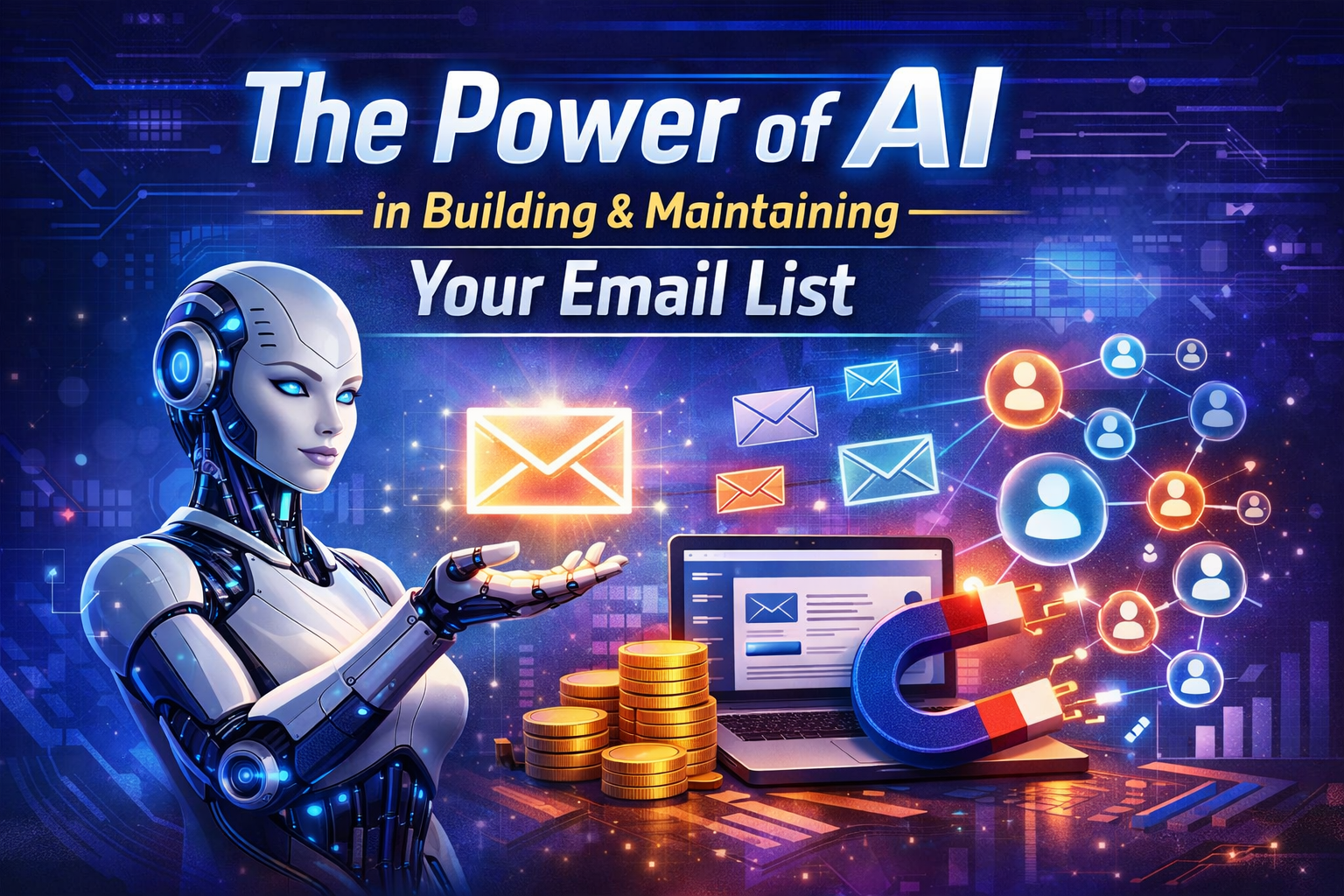
The Real Power of Letting AI Build & Maintain Your Email List

(And Why It’s Changing the Game for Everyday Marketers)

If you’ve spent any time trying to grow an email list the “old way,” you already know the truth…

It’s slow.
It’s inconsistent.
And most of the time—it feels like you’re guessing.

One day you’re writing emails.
The next day you’re trying to figure out funnels.
Then you’re chasing traffic, tweaking subject lines, or wondering why nobody is opening your emails.

Now imagine this instead:

👉 Your email list is growing every single day
👉 Your emails are being sent automatically
👉 Your system learns what works—and improves itself
👉 And you’re not stuck doing all the heavy lifting

That’s exactly where AI steps in—and why more marketers are turning to it to build and maintain their email lists.

Let’s break down what’s really happening here—and why this shift matters more than most people realize.


1. AI Removes the “Manual Grind” Completely

Traditional email marketing requires a lot of repetitive work:

  • Uploading leads
  • Segmenting lists
  • Writing emails
  • Scheduling campaigns
  • Tracking results

AI flips that entire process on its head.

Instead of manually doing everything, AI systems automate:

  • Lead capture
  • List organization
  • Email sequencing
  • Follow-ups
  • Optimization

In fact, automation alone can save marketers 6+ hours per week and eliminate repetitive tasks for over 70% of users.

That’s not just convenience—that’s leverage.

You’re no longer working in your business…
You’re working on it.


2. Your List Grows While You’re Not Even Working

This is where things get interesting.

AI doesn’t just help you manage your list—it helps grow it automatically.

Here’s how:

  • It tracks behavior (clicks, sign-ups, activity)
  • It identifies patterns in what people respond to
  • It adapts campaigns in real time
  • It triggers emails based on actions

That means instead of waiting for leads…

👉 The system attracts, nurtures, and converts them on autopilot

AI-powered marketing systems can analyze user behavior and continuously adjust messaging to match what people want to see.

So instead of guessing what works…

The system knows.


3. Personalization at Scale (Without You Writing Every Email)

Let’s be honest—generic emails don’t work anymore.

People can spot them instantly.

AI solves this by creating personalized experiences for every subscriber.

It can:

  • Customize subject lines
  • Tailor content based on behavior
  • Recommend products or offers
  • Adjust tone and timing

And the results?

  • Higher open rates
  • More clicks
  • Better engagement

AI-driven campaigns have been shown to generate:

  • 52% higher open rates
  • 332% more clicks
  • Massive improvements in conversions

That’s the difference between sending emails…
And sending emails people actually care about.


4. Better Timing = More Money

Timing matters more than most people realize.

Send an email at the wrong time?
It gets ignored.

Send it at the right time?
It gets opened—and acted on.

AI analyzes:

  • When your subscribers are most active
  • When they usually open emails
  • When they click

Then it sends emails at the perfect moment for each person.

No guessing. No testing for weeks.

Just smarter delivery.


5. Smarter Lead Scoring = Higher Conversions

Not every lead is ready to buy.

AI helps you figure out:

  • Who’s interested
  • Who’s just browsing
  • Who’s ready to take action

This is called lead scoring—ranking prospects based on their likelihood to convert.

Instead of treating every subscriber the same…

AI helps you focus on the ones most likely to become customers.

That means:

👉 Less wasted effort
👉 More targeted messaging
👉 Higher conversion rates


6. AI Turns Data Into Decisions (Instantly)

Most marketers collect data… but never really use it.

AI changes that.

It analyzes:

  • Open rates
  • Click behavior
  • Purchase patterns
  • Engagement trends

And then it acts on it automatically.

This gives you:

  • Real-time optimization
  • Better decision-making
  • Faster growth

AI provides deeper insights and allows businesses to adapt quickly to changes in customer behavior.

So instead of reacting late…

You’re always one step ahead.


7. More Revenue Without More Work

Here’s the part most people care about.

Automation doesn’t just save time—it makes more money.

  • Automated emails generate 320% more revenue than non-automated campaigns
  • AI-driven personalization can increase revenue by over 40%

Why?

Because AI delivers:

  • The right message
  • To the right person
  • At the right time

Every single time.

And it does it consistently.


8. AI Levels the Playing Field

In the past, building a powerful email system required:

  • Big budgets
  • Teams
  • Technical knowledge

Now?

AI makes it possible for anyone to compete.

Even solo creators and beginners can:

  • Build large email lists
  • Automate campaigns
  • Scale their income

In fact, many business owners believe AI helps smaller players compete with larger companies by increasing efficiency and performance.

That’s a huge shift.


9. It Works 24/7 (Even When You Don’t)

Here’s something most people overlook:

AI doesn’t sleep.

It doesn’t take breaks.
It doesn’t lose focus.
It doesn’t forget follow-ups.

It keeps working:

  • Capturing leads
  • Sending emails
  • Optimizing campaigns
  • Improving results

All day. Every day.

That’s how real scalability happens.


10. The Future Is Fully Automated Systems

We’re moving into a world where:

  • AI builds funnels
  • AI writes emails
  • AI nurtures leads
  • AI optimizes everything

Some platforms are already capable of running entire email sequences end-to-end with minimal human input.

And this is just the beginning.


So What Does This Mean for You?

It means one simple thing:

👉 You don’t have to do everything yourself anymore.

Instead of:

  • Struggling to grow your list
  • Writing every email manually
  • Guessing what works

You can let AI handle the heavy lifting while you focus on the bigger picture.


A Simple Next Step

If you’re curious what this actually looks like in action…

There’s a system designed to do exactly what we’ve been talking about:

👉 Build your email list
👉 Grow your downline
👉 Automate your follow-up
👉 Help you earn—without ads or chasing people

You can take a closer look here:
👉 AI Matrix Spillover

No pressure—just see how it works and decide for yourself.


Final Thoughts

The truth is…

Email marketing isn’t going away.
But the way it’s done is changing fast.

The people who win moving forward won’t be the ones working harder…

They’ll be the ones using smarter systems.

AI gives you:

  • Time freedom
  • Better results
  • Consistent growth
  • And a real chance to scale without burnout

And once you experience that shift…

There’s really no going back.

The Facebook Lead Machine: How Affiliate Marketers Get Qualified Leads Without Ads, Spam, or Tech Skills

Introduction: Breaking the Frustrating Loop

If you’re an affiliate marketer, chances are you started with a sense of excitement and ambition. You saw the stories—people earning commissions from anywhere in the world, working on their terms, promising yourself you’d reach that same freedom. But then you joined a program and hit a wall. Your friends and family don’t want to hear another pitch. You don’t have a huge audience. Every expert seems to run expensive Facebook ads you can’t afford. You try to post online but feel lost, awkward, and invisible. And worst of all, you feel like you might not be cut out for this.

If any of this sounds familiar, you’re not alone. In fact, this is the story for most people starting out—but it’s not the end of the story. This ebook will show you a different, smarter path for getting high-quality leads from Facebook, even if you have no audience and zero budget. You’ll discover how to stand out, attract the right people, and have people asking YOU about your business—all without spamming, running ads, or feeling like a salesy robot.

This guide isn’t about tricks or hacks. It’s about building your business the right way—earning trust, opening real conversations, and helping people solve real problems. Even if you’re just starting out, you can achieve success. By the end, you’ll have a step-by-step posting framework, know how to optimize your profile, and have a clear strategy for conversations that lead to signups and sales. Let’s break free of the frustrating loop—and start building the business you really want.

You don’t have to be great to start, but you have to start to be great.

Why Most Affiliate Marketers Fail on Facebook

Facebook can be a challenging environment for affiliate marketers. There’s opportunity, but most newcomers are lost in a crowd, copying what they see others do—with disappointing results. Let’s break down the most common mistakes:

  • Posting raw affiliate links with no explanation or context (people scroll by or report them as spam).
  • Spamming Facebook groups, hoping for clicks, but damaging your reputation instead.
  • Copying and pasting messages or scripts that sound robotic and insincere.
  • Attempting to sell immediately, before you’ve established any trust with your audience, is a common mistake.

The result? Silence and rejection. Or worse—getting your account flagged, blocked, or banned. It’s not your fault. Most programs teach outdated advice or gloss over the actual process of connecting with people. It’s easy to feel like you’re failing… even though you’re just following bad instructions.

Here’s the truth: The Facebook algorithm is designed to prioritize authentic connection. People don’t come to Facebook to be sold—they come for stories, value, and real human interaction. If your posts look like ads or generic copy-paste pitches, you’re missing out on what actually works.

Top Reasons Marketers Fail on Facebook

Posting Affiliate Links Without Context

Dropping raw links looks spammy and desperate. People tune out or report your posts, killing your reach and reputation.

Copying and Pasting Scripts

Templates sound generic and robotic. They rarely build trust. Facebook users can sense inauthenticity a mile away.

Getting Blocked or Reported

Repeated spam or pushy tactics often result in being blocked, reported, or even banned, ruining your chance to build a brand on Facebook.

Turning Failure into Opportunity

If any of these failures sound familiar, don’t be discouraged. It’s not about hustling harder or sending more messages—it’s about a smarter, more human approach. The next chapter will introduce the mindset that sets successful affiliate marketers apart. When you master it, you’ll start to see leads, conversations, and commissions grow—without ever feeling pushy.

The Attraction Marketing Mindset

Attraction marketing involves a fundamental shift in perspective. Instead of chasing people, you become someone worth following—someone others are drawn to learn from and connect with. This approach is your antidote to the spammy, desperate marketing most of your competition is still stuck in.

So what does attraction marketing actually look like on Facebook? You’ll share value, tell your story, and inspire curiosity. Over time, you’ll build trust—the one thing every affiliate marketer desperately needs. This method gets people to contact you, ask about your offers, and learn how to get the results you share.

  • Lead with genuine value: Teach, inspire, or encourage your audience with every post.
  • Stay consistent: Become a regular presence in your followers’ feed, without being repetitive.
  • Share your journey (including struggles): Authentic stories are magnets for attention and engagement.
  • Build curiosity: Hint at your success or results, but don’t give away everything at once.
  • Connect, don’t just pitch: Focus on conversations, not just conversions.

This mindset shift might feel uncomfortable at first, especially if you’re used to hard selling. But as you settle into it, you’ll discover Facebook marketing feels more like making friends and less like cold calling. Leads become conversations, and conversations become customers—naturally and authentically.

People don’t buy what you do; they buy why you do it.

Attraction Marketing: Key Benefits

Leads Come to You

You become a magnet for high-quality prospects who resonate with your story and approach.

Builds Trust

When you add value before asking for anything, you position yourself as a credible resource—not just another seller.

Better Conversations

When you attract, not chase, people reach out genuinely interested—making every conversation natural and relaxed.

Optimizing Your Facebook Profile for Leads

Your Facebook profile is more than just a personal space—it’s your digital billboard. Before anyone ever comments or messages you, they usually check your profile. That’s why it’s crucial to treat it like prime real estate for your affiliate business. The goal: Make it instantly clear who you help and how you can help them—while remaining approachable and authentic.

  • Use a clear, friendly profile photo. Smile, look approachable, and make sure your face is visible.
  • Your cover photo should subtly hint at your offer or the results you help people achieve. For example, an image of people working remotely for an affiliate freedom offer.
  • Craft a bio that describes clearly who you help and what you deliver in one sentence. For example, ‘I help busy parents create income online without tech overwhelm.’
  • Use the Featured section to pin a post or image that leads to your free training or group. This is valuable digital real estate most people ignore!

Small changes to your profile can have a huge impact on your results. When your digital storefront looks professional and crisp, people are much more likely to reach out or respond to your content. Let’s look at how you can implement these changes right away.

Profile Optimization Checklist

  • Profile photo: Friendly, clear, and recent. Avoid logos or blurry shots.
  • Cover photo: Relates to your offer, lifestyle, or the transformation you help people achieve.
  • Bio: One clear line about your audience and result, plus a lead magnet link if possible.
  • Featured section: Pin your best post or a link to your free training group/resource.
  • About info: Fill out work and details sections relevant to your personal brand (don’t overlook these—Google indexes them!).

Implement these tweaks today and you’ll instantly stand out in a sea of generic profiles. Prospects will know, within seconds, if you’re someone who can help them. This quiet credibility is the foundation of your attraction marketing system.

Profile Essentials: What Works?

Friendly Profile Photo

A bright, clear photo instantly builds rapport. First impressions matter online—use yours wisely.

Result-Focused Cover Photo

Showcase the outcome you help people achieve—like freedom, family, or flexibility—subtly hinting at your offer.

Clear Bio & Featured Section

State who you help and how, with a simple call to action or link to your free resource front and center.

The Simple Posting Strategy Framework

Now that your profile is working for you, it’s time to start posting—the right way. Forget spraying links or running confusing ads. Instead, use the 7-day posting framework that keeps your audience engaged and curious while gently guiding them toward your offer. Here’s how it works:

  • Day 1: Story Post—Share a real, personal struggle or a recent win related to your journey.
  • Day 2: Value Post—Teach one small tip relevant to your ideal clients’ challenges.
  • Day 3: Curiosity Post—Hint at a result or transformation, but don’t reveal everything up front.
  • Day 4: Engagement Post—Ask a question that naturally invites comments and participation.
  • Day 5: Lifestyle Post—Show the life you’re building or a behind-the-scenes look.
  • Day 6: Call-to-Action Post—Directly invite people to your free training, group, or resource.
  • Day 7: Rest or Repurpose—Share a recap, revisit your best post, or take a day off.

This framework does a few important things: it keeps your content feeling fresh, establishes you as a relatable human (not a faceless sales bot), and creates anticipation for what’s coming next. Let’s look at examples for each post type.

Examples of Each Post Type

  • Story Post: ‘Last year, I was working 60 hours a week and missing out on family time. I wanted more but didn’t know where to start. Discovering affiliate marketing changed everything.’
  • Value Post: ‘Here’s the tool I use to schedule Facebook posts in just 10 minutes each week. Massive time saver! DM me ‘schedule’ if you want the name.’
  • Curiosity Post: ‘Just got a message from a friend saying, “How did you hit your first $500 online without spending a dime on ads?” Can’t wait to share soon…
  • Engagement Post: ‘If you could instantly get back 5 hours a week, what would you do with the extra time? Comment your best ideas!’
  • Lifestyle Post: ‘Had coffee at 10am, took a midday walk, and still hit this week’s sales milestone. Freedom is why I started …’
  • Call-to-Action Post: ‘Want to see exactly how I used Facebook to land my first commission? Drop a ‘yes’ below or DM me for my free training.’
  • Rest or Repurpose: ‘In case you missed it, here’s the story that started it all—and the reason I keep going.’

You don’t need to be a master writer. Just be authentic and helpful! Use your framework weekly—it’ll quickly become second nature, and your audience will start to notice. Track what gets engagement, tweak as needed, and watch as people begin reaching out to YOU.

Sample Results: Posting Strategy Overview

7-Day Engagement Results Snapshot

  • Story Post: 34
  • Value Post: 42
  • Curiosity Post: 27
  • Engagement Post: 51
  • Lifestyle Post: 19
  • Call-to-Action Post: 44
  • Repurpose/ Rest: 23

As you can see in the chart above, engagement and reach vary by post type—but the mix creates momentum. Story, value, and engagement posts generally draw the highest number of comments and reactions, setting you up for a strong call-to-action by week’s end. Keep testing and refining your mix. The results will continue to grow as you get more comfortable sharing your journey and inviting authentic conversations.

Starting Conversations That Convert

All the content in the world won’t help if you freeze up when someone responds to your post or message. The real magic happens in Messenger conversations—that’s where a comment turns into a lead, and a lead turns into a client or commission. But for many marketers, this is the scariest part. They don’t want to sound pushy or say the wrong thing.

Relax. The best conversations feel just like connecting with a new friend. Here’s a foolproof flow you can use for every Messenger convo:

  • Thank them for commenting or reaching out. Ex: ‘Hey [Name], thanks so much for your comment! What inspired you to reach out?’
  • Ask an open-ended question about their goal or struggle. This keeps things natural and not salesy.
  • Listen and acknowledge their answer. Show you genuinely care about their situation.
  • If your training is a fit, invite them casually. Ex: ‘I actually have a free video walking through exactly how I got started. Mind if I send it over?’
  • If not, offer encouragement or a free tip anyway—keep goodwill high for next time!

You don’t need to close to everyone. In fact, focusing on connection over conversion is what builds a loyal audience. As you get comfortable with these conversations, you’ll find yourself naturally moving people toward your free training—no awkward pitching required.

Conversation Starters: What to Ask?

Open with Gratitude

Always thank them for reaching out or commenting. It sets a positive tone right away and signals you’re here to help.

Ask About Their Goals

Use open-ended questions like, ‘What are you hoping to achieve online?’. This leads to real, revealing conversations—not forced sales pitches.

Offer Useful Advice

Whether or not someone is a fit for your offer, always give something of value—a tip, an encouragement, or a simple resource.

Approach each conversation with the simple goal of helping, not selling.

The Next Step: Your Path Forward

You’ve just absorbed a powerful system for generating high-quality leads through Facebook—without ads, tech headaches, or feeling sleazy. Remember, building your affiliate business is about progress, not perfection. Stay consistent, give value, start authentic conversations, and your results will compound over time.

Here’s what to do next:

  1. Audit and optimize your Facebook profile using the checklists you just learned.
  2. Plan out your 7-day posting strategy for the next two weeks—use the sample posts to get started.
  3. Choose one small thing to improve each week, whether that’s your profile, your messaging, or your call to action.
  4. Track your results. Celebrate every authentic conversation and every new lead—that’s real progress!

You don’t need to be an expert, have a huge following, or spend a dime on ads to succeed. You just need a system and the willingness to show up—for yourself and for your audience. Every big result starts with a single, simple step taken today.

A Final Word & Your Invitation

You now have the exact framework that dozens of top affiliates use to fill their pipeline with free, high-quality leads—no spamming, no costly ads, and no need for guru-level skills. If you’ve made it this far, you’re already ahead of 95% of your competition. The next step? Dive deeper with my free video training. There, you’ll see real profiles, posts, and conversations in action, and learn how to tailor the system to your unique strengths.

Is ICE Necessary? Why the Anger Feels Everywhere — and Whether America Can Still Come Back Together

There’s a tension in the country right now that you can feel without turning on the news. It’s in comment sections. It’s at family dinners. It’s in the way people talk past each other instead of to each other.

Few topics bring that tension out faster than immigration — and especially ICE.

Ask one group and ICE is essential for law and order. Ask another and ICE is a symbol of cruelty and fear. Somewhere in between is a country that seems exhausted, angry, and unsure how to move forward.

So let’s take this one piece at a time.

Is ICE Necessary?

At its core, ICE — Immigration and Customs Enforcement — exists to enforce immigration laws passed by Congress. That’s the simple, unglamorous truth.

Every country enforces its borders in some way. That’s not controversial globally, even if it’s explosive in American politics. Laws exist. Someone has to enforce them. If immigration law exists at all, then enforcement will exist in some form.

So yes, some version of immigration enforcement is necessary. But here’s where the conversation usually breaks down. People aren’t just debating whether laws should be enforced. They’re debating how they’re enforced, who gets targeted, and what values guide that enforcement.

Supporters of ICE argue:

  • No country can function without borders.
  • Unchecked immigration strains housing, schools, healthcare, and wages.
  • Law enforcement agencies don’t get to pick which laws they like.

Critics argue:

ICE tactics are often aggressive, opaque, and traumatizing, Families get torn apart for non-violent offenses. Enforcement has become detached from basic human dignity. Both sides are talking about real things. That’s what makes it messy.

The real issue isn’t “ICE vs no ICE.”

It’s whether enforcement can exist without becoming dehumanizing.

And that’s where trust breaks.

Why All the Violence and Hatred?

The anger didn’t start with ICE. ICE became a lightning rod for something deeper.

People are angry because they feel unheard.

They’re afraid because they feel unstable.

They lash out because they think the other side is trying to erase their way of life.

Fear always looks like anger from the outside.

For some Americans, immigration feels like chaos — jobs changing, neighborhoods changing, language barriers, rising costs. They don’t feel racist; they feel overwhelmed. When they’re told their concerns make them evil, they dig in harder.

For others, ICE represents something terrifying — raids, detentions, parents disappearing, kids left behind. When you live with that fear, every badge looks like a threat.

Now add:

  • Social media outrage algorithms
  • Politicians rewarded for inflaming division
  • News cycles that profit from fear
  • Years of economic pressure and cultural whiplash
  • You don’t get conversation.
  • You get tribal warfare.

Violence grows when people stop seeing each other as human and start seeing each other as symbols. “The enemy.” “The threat.” “The problem.”

Once that line is crossed, cruelty becomes easy.

What’s Actually Needed for a Peaceful Solution?

Here’s the part nobody likes hearing: there is no single policy fix.

Peace doesn’t come from one bill, one agency reform, or one election. It comes from systems that reduce fear instead of amplifying it.

That starts with a few uncomfortable truths.

1. Immigration Law Is Broken — and Everyone Knows It

We’ve patched the system for decades instead of fixing it.

Legal immigration pathways are slow, confusing, and often unrealistic. Asylum systems are overwhelmed. Courts are backlogged. Enforcement is inconsistent. That chaos benefits smugglers, bad actors, and political opportunists — not citizens or migrants.

A peaceful solution requires:

  • Clear, modernized immigration laws
  • Faster, fairer legal pathways
  • Real consequences for exploitation by employers and traffickers

Order reduces fear. Chaos feeds it.

2. Enforcement Must Be Accountable

Enforcement without transparency breeds abuse.

Enforcement without oversight breeds distrust.

If ICE (or any enforcement agency) is going to exist, it has to operate under:

  • Clear rules of engagement
  • Independent oversight
  • Consequences for misconduct
  • A focus on serious threats, not indiscriminate targeting

Law enforcement doesn’t lose legitimacy because it enforces laws. It loses legitimacy when people believe it doesn’t answer to anyone.

3. Human Dignity Has to Be Non-Negotiable

This shouldn’t be controversial, but it is.

You can enforce laws and treat people humanely. Those things are not opposites.

That means:

  • Ending family separation as a default tool
  • Ensuring due process
  • Treating migrants as people, not statistics

When dignity disappears, resistance hardens.

4. Language Matters More Than People Admit

Words shape reality.

When politicians talk about “invasions,” violence feels justified.

When activists paint all enforcement as evil, compromise becomes betrayal.

A peaceful solution requires leaders who lower the temperature instead of spiking it. That doesn’t mean being weak. It means being responsible.

Is There Any Chance of Reuniting the Country?

Short answer: yes — but not the way people think.

The country won’t reunite around agreement.

It will reunite around tolerance for disagreement.

America has never been unified in the sense people romanticize. We’ve always argued. Loudly. Sometimes badly. The difference now is that disagreement has turned into moral exile.

“You’re not just wrong — you’re dangerous.”

That mindset kills unity.

Reuniting the country will take:

Accepting That Half the Country Isn’t Evil

This sounds obvious. It isn’t.

People need to relearn how to say, “I don’t agree with you, but I understand why you feel that way.”

That single sentence is more powerful than a thousand debates.

Decentralizing the Fight

Not every issue needs to be a national cage match.

Local solutions — tailored to local realities — reduce the sense that one side is forcing its will everywhere at once. Federalism isn’t a flaw. It’s a pressure valve.

Leaders Willing to Lose Applause

Real unity won’t come from viral soundbites. It will come from leaders willing to tell their own side uncomfortable truths.

That kind of leadership doesn’t trend. It also doesn’t destroy countries.

Citizens Choosing Curiosity Over Rage

This part isn’t on politicians. It’s on regular people.

Every time someone chooses to ask instead of attack, the temperature drops a degree. Enough degrees and the whole system changes.

The Hard Truth

There is no perfect answer to immigration. There never has been.

There are only trade-offs:

  • Order vs openness
  • Security vs compassion
  • Speed vs fairness

The question isn’t whether ICE should exist or disappear overnight. The question is whether the country can build systems that enforce laws without losing its moral compass — and whether citizens can argue fiercely without tearing each other apart.

Peace isn’t silence.

Unity isn’t sameness.

And disagreement isn’t hatred — unless we let it become that.

The country doesn’t need everyone to agree.

It needs people to remember they’re still on the same side of the table.

10 Important Things Seniors Should Look for in 2026

As 2026 approaches, many seniors are asking the same quiet question: What should I really be paying attention to now?

  • Not headlines.
  • Not social media noise.
  • Not political shouting matches.

The focus should be on matters that have a tangible impact on everyday life.

For seniors, the coming year isn’t about chasing trends. It’s about protecting independence, stability, health, and the ability to live with dignity. Some of the most significant changes ahead aren’t dramatic. They’re subtle. And those are often the ones that matter most.

Here are ten crucial areas seniors should closely monitor in 2026, along with the reasons behind each one’s importance.

1. Healthcare costs (not just coverage)

Watch what happens to out-of-pocket costs—prescriptions, specialists, and long-term care. Insurance can look fine on paper and still nickel-and-dime you in real life.

2. Prescription drug access

More generics, more mail-order options, and tighter rules on pricing are coming. The question is whether they actually make meds easier to get—or just harder to understand.

3. Social Security changes

These changes are not necessarily cuts, but rather adjustments. COLAs, retirement age discussions, and taxation thresholds are all on the table. 

Even small tweaks matter if you’re on a fixed income.

4. Digital IDs & online security

Banks, medical portals, and even government services are pushing harder online.  Seniors should watch for:

  • Simpler login systems
  • Better fraud protection
  • Less reliance on passwords

Scams aren’t slowing down. Protection has to speed up.

5. AI replacing human help

Customer service, healthcare triage, and even financial advice is being automated. The key question:

👉 Can you still reach a real person when it matters?

6. Property taxes & housing affordability

Rising local taxes and insurance can quietly price people out, even if they have paid off their homes. Many seniors are already feeling this squeeze.

7. Transportation options

Driving less doesn’t mean giving up independence—if communities invest in:

  • Senior-friendly transit
  • Rideshare alternatives
  • Walkable planning

Watch your local government here.

8. Telehealth quality

Telehealth is here to stay, but quality varies wildly. In 2026, look for:

  • Better diagnostics
  • Fewer rushed appointments
  • Clear follow-ups

Convenience only helps if care stays solid.

9. Work & income flexibility

More seniors are choosing part-time or project work—not because they have to, but because they want to. Watch for:

  • Age-friendly hiring
  • Flexible schedules
  • Fewer penalties for earning while retired

10. Free speech & open discussion

This final point goes beyond finances or healthcare, but it matters deeply.

Many seniors grew up in a time when debate, disagreement, and conversation were normal parts of public life. Today, online platforms and public spaces are increasingly regulated, moderated, and filtered.

In 2026, seniors should pay attention to:

  • Where open discussion is still encouraged
  • How speech rules are enforced
  • Whether respectful disagreement is allowed

This affects news consumption, social interaction, and the ability to share opinions without fear of being silenced.

A healthy society depends on conversation—not conformity.

The Bigger Picture

The common thread across all ten of these issues is control.

  • Control over money.
  • Control over healthcare.
  • Control over information.
  • Control over daily life.

Seniors in 2026 won’t need more noise. They’ll need clarity, transparency, and choices that respect their experience and independence.

Paying attention now—before changes become permanent—can make the difference between reacting and preparing.


Translate »
0 Shares
Share via
Copy link